The Complete Guide to Social Media: Platforms, Strategies, and Future Trends
Introduction
Social media has transformed the way people communicate, learn, shop, and do business. What started as simple networking platforms has evolved into a powerful ecosystem influencing global economies, personal branding, marketing strategies, and even political landscapes. Today, social media is not just an option—it is a necessity for individuals, businesses, and organizations aiming to stay relevant in the digital age.
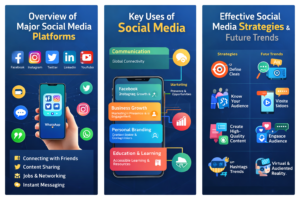
This article provides a comprehensive overview of social media, covering major platforms, their uses, strategies for success, and future trends.
What is Social Media?
Social media refers to digital platforms that allow users to create, share, and interact with content in real time. These platforms enable communication through text, images, videos, and live streaming, fostering global connectivity.
Social media can be categorized into several types:
- Social networking platforms
- Content-sharing platforms
- Microblogging platforms
- Professional networks
- Messaging apps
Each category serves a different purpose but collectively contributes to a highly interconnected digital ecosystem.
Major Social Media Platforms
1. Facebook
Facebook remains one of the largest social networking platforms globally. It allows users to connect with friends, join groups, create pages, and share content.
Key Features:
- News Feed
- Groups and Communities
- Marketplace
- Facebook Ads
Use Cases:
- Business marketing
- Community building
- Event promotion
2. Instagram
Instagram is a visual-based platform focused on photos and short videos. It is highly popular among younger audiences and influencers.
Key Features:
- Reels (short-form videos)
- Stories
- IG Live
- Shopping features
Use Cases:
- Personal branding
- Influencer marketing
- E-commerce promotion
3. Twitter (X)
Twitter, now rebranded as X, is a microblogging platform where users share short messages called tweets.
Key Features:
- Real-time updates
- Trending topics
- Hashtags
Use Cases:
- News updates
- Thought leadership
- Customer engagement
4. LinkedIn
LinkedIn is a professional networking platform designed for career development and business connections.
Key Features:
- Professional profiles
- Job listings
- Industry content
Use Cases:
- Job searching
- B2B marketing
- Personal branding
5. YouTube
YouTube is the largest video-sharing platform, offering long-form and short-form video content.
Key Features:
- Video uploads
- Monetization options
- YouTube Shorts
Use Cases:
- Education
- Entertainment
- Brand awareness
6. TikTok
TikTok focuses on short, engaging video content and has rapidly gained global popularity.
Key Features:
- Algorithm-driven feed
- Viral trends
- Creative tools
Use Cases:
- Content creation
- Brand promotion
- Viral marketing
7. WhatsApp & Telegram
These are messaging platforms that also support group communication and business interactions.
Key Features:
- Instant messaging
- Broadcast lists
- Business accounts
Use Cases:
- Customer support
- Community building
- Direct marketing
Importance of Social Media
1. Communication and Connectivity
Social media connects people across the globe instantly. It allows users to maintain relationships and build new ones regardless of geographical boundaries.
2. Business Growth
Businesses use social media for:
- Marketing and advertising
- Customer engagement
- Lead generation
3. Personal Branding
Individuals can showcase their skills, experiences, and achievements to build a personal brand and attract opportunities.
4. Education and Learning
Many platforms provide educational content, tutorials, and courses, making learning accessible to everyone.
Social Media Marketing
Social media marketing involves using platforms to promote products, services, or brands.
Key Elements:
Content Creation
Creating valuable and engaging content is the foundation of social media success.
Consistency
Posting regularly helps maintain visibility and audience engagement.
Audience Targeting
Understanding your audience ensures your content reaches the right people.
Analytics
Tracking performance helps improve strategies and optimize results.
Content Types on Social Media
- Text posts
- Images and infographics
- Videos (short and long)
- Live streaming
- Stories
Each content type serves a unique purpose and appeals to different audience preferences.
Strategies for Success
1. Define Your Goals
Clear goals help shape your strategy. These could include:
- Increasing followers
- Generating leads
- Building brand awareness
2. Know Your Audience
Understanding your audience’s interests, behavior, and preferences is crucial.
3. Choose the Right Platforms
Not all platforms suit every business. Select platforms based on your target audience.
4. Create High-Quality Content
Quality always beats quantity. Focus on delivering value.
5. Engage with Your Audience
Respond to comments, messages, and feedback to build trust.
6. Use Hashtags and Trends
Leveraging trends increases visibility and reach.
Challenges of Social Media
1. Information Overload
With so much content available, standing out becomes difficult.
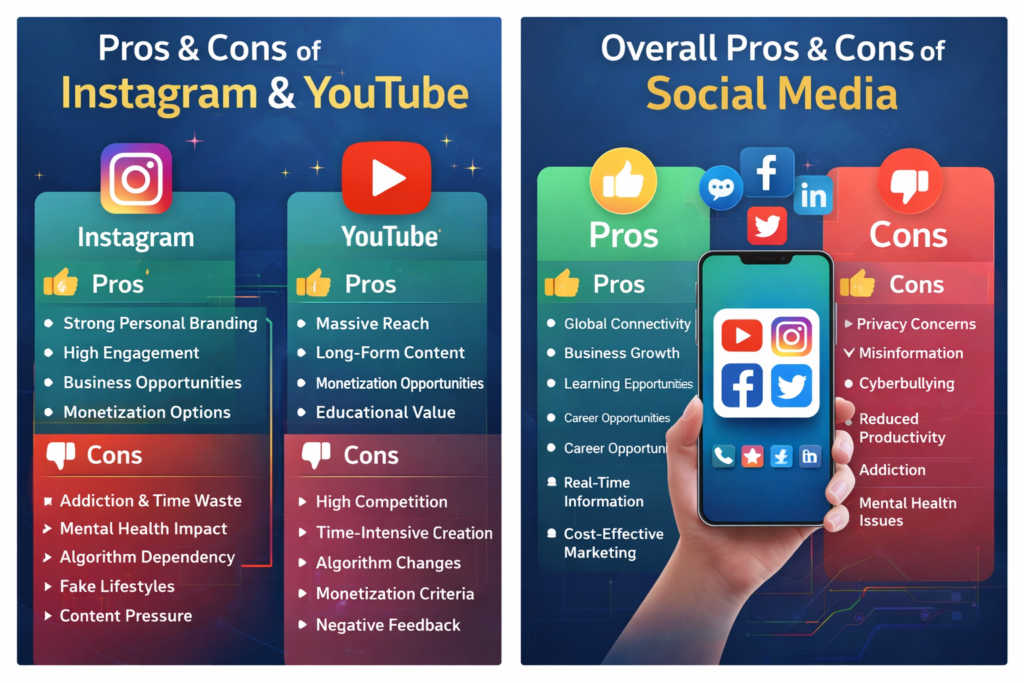
2. Privacy Concerns
Users are increasingly concerned about data security.
3. Negative Feedback
Handling criticism and negative comments is a common challenge.
4. Algorithm Changes
Frequent changes in platform algorithms can impact reach and engagement.
Social Media for Businesses
Businesses can use social media to:
- Build brand awareness
- Engage with customers
- Drive sales
- Provide customer support
Small Business Advantage
Social media provides a cost-effective way for small businesses to compete with larger companies.
Influencer Marketing
Influencer marketing involves collaborating with individuals who have a large following.
Benefits:
- Increased credibility
- Wider reach
- Higher engagement
Paid Advertising
Social media platforms offer advanced advertising options.
Types of Ads:
- Display ads
- Video ads
- Sponsored posts
Benefits:
- Targeted audience reach
- Measurable results
- Scalability
Future of Social Media
1. AI Integration
Artificial intelligence will play a major role in content creation and personalization.
2. Short-Form Video Dominance
Short videos will continue to dominate user engagement.
3. E-commerce Integration
Social media platforms are becoming shopping hubs.
4. Virtual and Augmented Reality
These technologies will enhance user experiences.
Conclusion
Social media is a powerful tool that continues to shape the digital world. Whether for personal use, business growth, or education, its impact is undeniable. Understanding different platforms and implementing effective strategies can unlock immense opportunities.
To succeed in social media, focus on providing value, staying consistent, and adapting to changing trends. As technology evolves, those who leverage social media effectively will stay ahead in the competitive digital landscape.
Final Thought:
Social media is not just about being online—it’s about creating meaningful connections, delivering value, and building a lasting impact.

Author: marketerspedia
marketers database hub